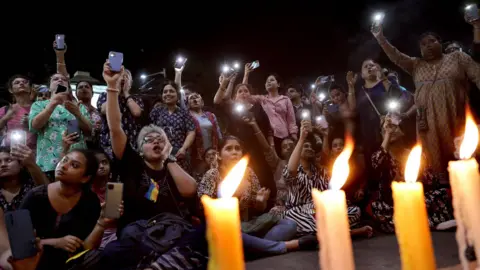
Junior doctors in Kolkata are defying a court order by continuing their strike in protest against the alleged rape and murder of a trainee doctor at a state-run hospital. The tragic incident has sent shockwaves across the medical community and has led to widespread anger and unrest among healthcare professionals.
Despite a court ruling mandating them to return to work, the junior doctors remain resolute in their decision to protest, demanding justice for their deceased colleague and improved safety measures for medical staff.
The Incident: A Shocking Crime
The case involves the brutal rape and murder of a trainee doctor at a hospital in Kolkata, West Bengal. According to reports, the victim was found in a critical condition in the hospital premises, and subsequent investigations pointed to sexual assault. She later succumbed to her injuries, sparking an outcry from both the medical fraternity and the general public.
The incident has raised serious concerns about hospital safety and the protection of medical professionals, especially women, working in state-run facilities. Many doctors believe that the administration failed to provide adequate security, making healthcare workers vulnerable to such heinous crimes.
Court Order and Defiance
In response to the strike, a Kolkata court issued an order requiring the protesting doctors to return to work, citing the importance of medical services, particularly in government-run hospitals that serve millions of patients daily. However, the junior doctors have refused to comply with the order, arguing that their protest is a necessary step to demand justice for their colleague and to push for systemic changes that will ensure their safety.
“The situation has reached a point where we can no longer remain silent,” said one of the protesting doctors. “We will continue the strike until concrete actions are taken to ensure that no healthcare professional has to work in fear of their life.”
Key Demands of the Protesters
The junior doctors are demanding:
- Swift Justice: They are calling for the immediate arrest and prosecution of those responsible for the rape and murder.
- Enhanced Security: The protesters are seeking improved security measures at all government hospitals, including the installation of CCTV cameras, increased police presence, and strict visitor regulations.
- Safe Working Conditions: They are advocating for safer working conditions, especially for women in healthcare, to prevent future tragedies.
- Government Accountability: The doctors want the state government and hospital administrations to take responsibility for their failure to provide adequate protection to medical staff.
Support and Solidarity
The strike has garnered significant support from various medical associations across the country. The Indian Medical Association (IMA) has expressed solidarity with the protesting doctors, urging the government to address their concerns and take immediate steps to enhance security at healthcare facilities.
Many doctors from other states have also shown their support by organizing symbolic protests and wearing black armbands while attending to patients. The solidarity across the medical community highlights the widespread concern over the safety of healthcare professionals in India, particularly in public hospitals that are often understaffed and lack sufficient security infrastructure.
Government’s Response
The West Bengal government has attempted to mediate the situation, urging the doctors to resume work while assuring them that the investigation into the case is being carried out swiftly. However, the assurances have done little to quell the anger and frustration among the doctors, who feel that similar promises have been made in the past without any substantial action.
The state’s Chief Minister, Mamata Banerjee, has called for calm and expressed her commitment to ensuring justice for the victim. However, she also emphasized the need for the strike to end, citing the significant strain it is placing on public healthcare services.
Public Reaction and Healthcare Impact
The ongoing strike has severely affected hospital services in Kolkata and across West Bengal, with thousands of patients left without critical medical care. Outpatient departments (OPDs) have been shut, elective surgeries have been postponed, and emergency services are operating with skeleton staff.
While many members of the public have expressed sympathy for the protesting doctors, there is growing concern over the impact of the strike on healthcare services. Patients, particularly those from rural areas who rely on state-run hospitals, have been the most affected by the disruption.
“I understand why the doctors are protesting, but we also need them to return to work. People are suffering,” said one family member of a patient affected by the strike.
Conclusion: The Road Ahead
The defiance of the court order by Kolkata’s junior doctors highlights the depth of their frustration and fear following the tragic rape and murder of their colleague. As the strike continues, the demand for justice and workplace safety remains central to the protest.
While the government attempts to resolve the situation, the incident has sparked a broader conversation about the safety of healthcare professionals in India and the urgent need for reform in public hospitals. The hope is that the protests will lead to lasting change, ensuring that no doctor has to work under the shadow of fear again.