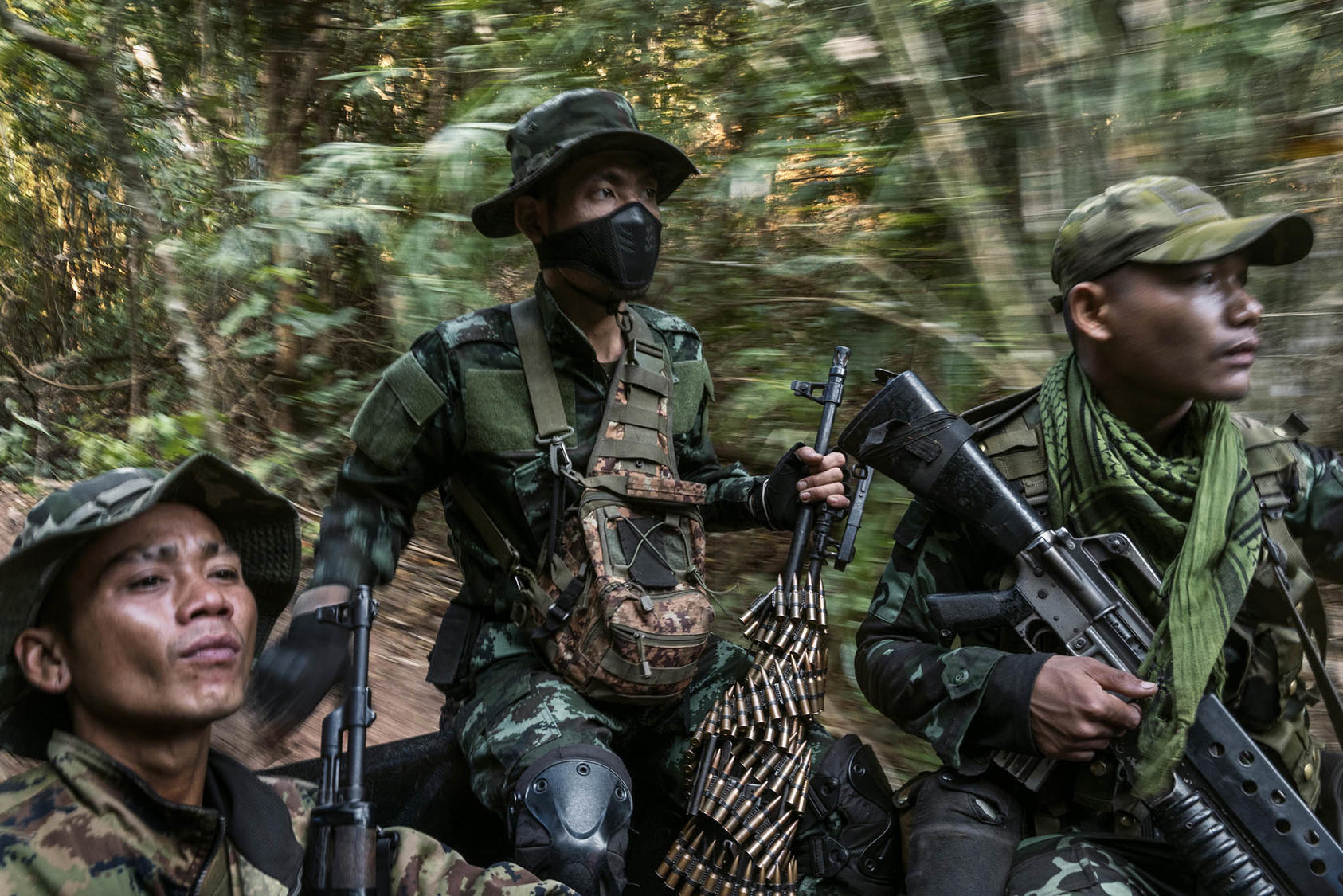
China’s strategic maneuvers in Myanmar, often described as “divide-and-rule” tactics, are increasingly being seen as a significant risk to regional stability. As Beijing continues to deepen its involvement in Myanmar’s internal conflicts, there are growing concerns that these actions could lead to widespread instability, not only within Myanmar but across Southeast Asia.
The Divide-and-Rule Strategy
China has long been accused of employing divide-and-rule tactics in Myanmar, leveraging its influence over various ethnic armed groups to maintain its strategic interests. By supporting different factions within Myanmar’s complex web of ethnic conflicts, China ensures that no single group becomes strong enough to challenge its influence or disrupt its economic and geopolitical goals in the region.
This strategy allows China to maintain a foothold in Myanmar’s resource-rich areas while keeping the central government and various ethnic groups dependent on Beijing’s mediation and support. However, this approach has also fueled ongoing violence, preventing any lasting peace from taking root in the country.
Impact on Myanmar’s Stability
The consequences of China’s actions in Myanmar have been devastating for the country. The ongoing support for ethnic armed groups has contributed to a cycle of violence that undermines efforts to achieve national reconciliation. As the central government struggles to maintain control, China’s influence grows, creating a situation where Myanmar’s sovereignty is increasingly compromised.
The divide-and-rule strategy has also led to widespread human suffering, with civilians caught in the crossfire of conflicts that are exacerbated by external interference. The prolonged instability has resulted in a humanitarian crisis, with millions displaced and in need of aid. This situation is further complicated by the presence of Chinese-backed infrastructure projects that have been accused of exploiting local communities and exacerbating tensions.
Regional Implications
China’s involvement in Myanmar is not just a domestic issue; it has broader implications for the entire Southeast Asian region. The instability generated by China’s tactics in Myanmar risks spilling over into neighboring countries, many of which are already dealing with their own internal conflicts and ethnic tensions.
The prospect of regional instability is particularly concerning for ASEAN countries, which have long sought to promote peace and stability in Southeast Asia. China’s actions threaten to undermine these efforts, potentially leading to a broader regional conflict if the situation in Myanmar continues to deteriorate.
China’s Strategic Interests
China’s divide-and-rule tactics in Myanmar are driven by its strategic interests in the region. Myanmar is a key part of China’s Belt and Road Initiative (BRI), with several major infrastructure projects aimed at connecting China to the Indian Ocean. These projects, including pipelines and ports, are crucial for China’s energy security and trade routes, making stability in Myanmar a top priority for Beijing.
However, rather than promoting peace, China’s approach has been to exploit divisions within Myanmar to secure its interests. By backing different factions, China ensures that it remains the dominant power in the region, able to dictate terms and protect its investments.
International Response
The international community has expressed concern over China’s actions in Myanmar, with many countries calling for a more responsible approach to the conflict. There is growing recognition that China’s divide-and-rule tactics are contributing to the destabilization of Myanmar and the broader region.
Countries like the United States, Japan, and members of the European Union have called for China to use its influence to promote peace rather than fuel conflict. However, given China’s strategic interests, it remains to be seen whether Beijing will alter its approach.
The Path Forward
As Myanmar continues to grapple with the consequences of China’s divide-and-rule tactics, the need for a comprehensive and coordinated international response becomes increasingly urgent. The international community must work together to pressure China to adopt a more constructive role in Myanmar’s peace process and to support efforts aimed at achieving lasting stability in the region.
At the same time, regional organizations like ASEAN must take a more active role in addressing the situation in Myanmar. By promoting dialogue and cooperation, ASEAN can help mitigate the risks posed by China’s actions and work towards a more peaceful and stable Southeast Asia.
Conclusion: A Risk to Regional Peace
China’s divide-and-rule tactics in Myanmar are not only fueling conflict within the country but also threatening the stability of the entire Southeast Asian region. As Beijing continues to pursue its strategic interests at the expense of peace, the risk of broader regional instability grows. The international community must act decisively to address this issue before the situation escalates further, endangering the future of the region.